
Censorship is endemic in video games. So much that we might not realise that’s the case. Hidden behind seemingly harmless labels, there’s a system that treats games as a moral hazard, brands them and even forbids them from sale. Understanding classification boards, and who is behind them, is the first step to learn how video games are censored.
CLASSIFICATION BOARDS
Classification boards are the main source of video game censorship. Industry organizations such as the ESRB (North America), CERO (Japan) and PEGI (Europe), as well as national bodies like the German USK, may appear innocuous However, a closer examination reveals the functions of traditional censor boards:
- Works must be submitted to them before release (Prior restraint)
- Art is judged, and labeled, based on their moral content or “potential for harm”.
- Their approval, or lack of, forces changes in those works or prevents them from being sold.
The term is an euphemism. “We are still a board of censorship” admits the director of the British Film Classification Board, which called itself the Censor Office until 1984. Its case is similar to that of New Zealand’s, led by a “Chief Censor”. According to the Saudi office, “Marvel’s Spider-Man 2 was classified after the publishing studio approved the modifications requested”, which were the removal of gay flags, dialogue and themes. Even the USK keeps an “Index” of “harmful media”. Indexing being, again, another word for censorship.
Moreover, “classification” is also an euphemism. That is, games are classified by keeping them away from those who do not belong to a particular class. That is why PEGI demands to “treat age recommendations as mandatory” and ensure “video games are not supplied to persons below the specified age”. Even Anne Mette of PEGI’s own Experts Group says it: “In principle and in practice, the age classification of content opens the possibility of keeping citizens away from this content, in other words, censorship”.
Access to information is a democratic right, both for minors and adults. Yet, anything boards deem unsuitable for the former ends up being applied to the latter. The Last of Us 2 wasn’t made for children, yet it was censored by CERO. Why do adults have to suffer the removal of cleavage, nipples and “suggestive sounds” from Pinball FX if they are not children? “We’ve been penalized ourselves by the ESRB previously”, confesses the studio’s vice president.
Notably, an “Adults Only” rating results in a sales ban. We saw this with Grand Theft Auto: San Andreas. The moment the ESRB gave it that rating, it was pulled from stores. And when the Australian board removed it from classification, it became a crime to distribute it. Adults aren’t exempt from video game censorship; we are amongst its targets.
GOVERNMENT CENSORSHIP
Video game classification claims to be a form of self-regulation; voluntary and beyond government control. Hardly the words I would use when noncompliance is considered a crime. Distributing games without the approval of the boards is punished by law, not just in China and Saudi Arabia, but also in so-called democracies. In Germany, if someone makes available, keeps in stock, offers or advertises a game “indexed” by the USK, such as Left 4 Dead 2 or Silent Hill: Homecoming, they will have his copies confiscated, face fines up to half a million euros and up to one year in prison.
The same situation applies to South Korea, New Zealand and Australia as well any country were PEGI and ESRB ratings are legally binding such as France, Portugal, Malta, Israel, Finland, Mexico, Canada and some United States Territories. According to the British Government, the VSC can “refuse to grant an age-rating for a video game […], meaning it would not be allowed to be sold in the UK”. If you still do, prepare for “up to two years in prison and an unlimited fine”.
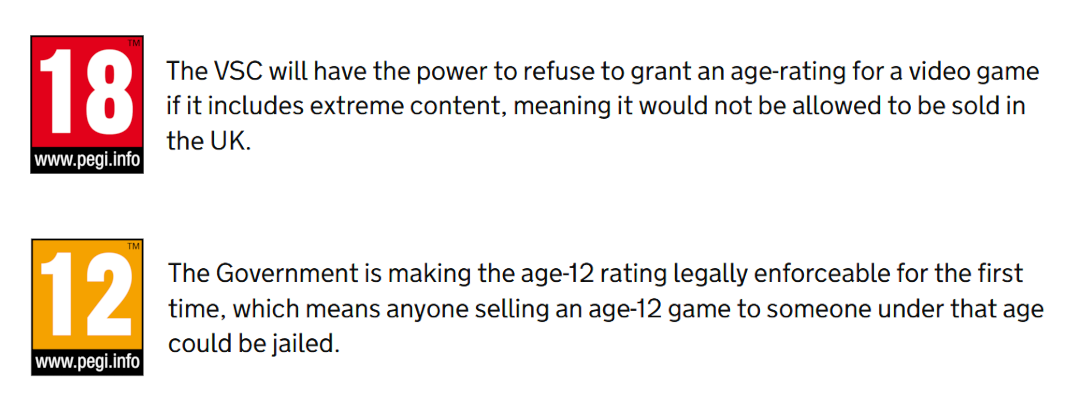
Wait, the VSC? Yes, that’s the organization that handles PEGI ratings from 12 years and up. Their work might apply to 41 different countries, but it was founded by Margaret Thatcher’s Home Secretary and answers to the Department of Culture of the United Kingdom. Consequently, members include a wide range of public servants and politicians such as Janet Paraskeva (Serious Organised Crime Agency), Baroness Kennedy of the Shaws (Labour Party) or Emma Ham-Riche of Mother’s Union, an organization dedicated to “the advancement of the Christian religion in the sphere of marriage and family life”.
Ratings below 12 are handled by the Dutch NICAM, “established in response to a directive of the European Commission” and enshrined by a 2001 media law. Regardless, PEGI’s advisory council is filled with other political representatives such as Ciaran Kissane of the Irish Film Censor’s office and Helena del Barrio, from the Spanish Ministry of Culture and Sports.
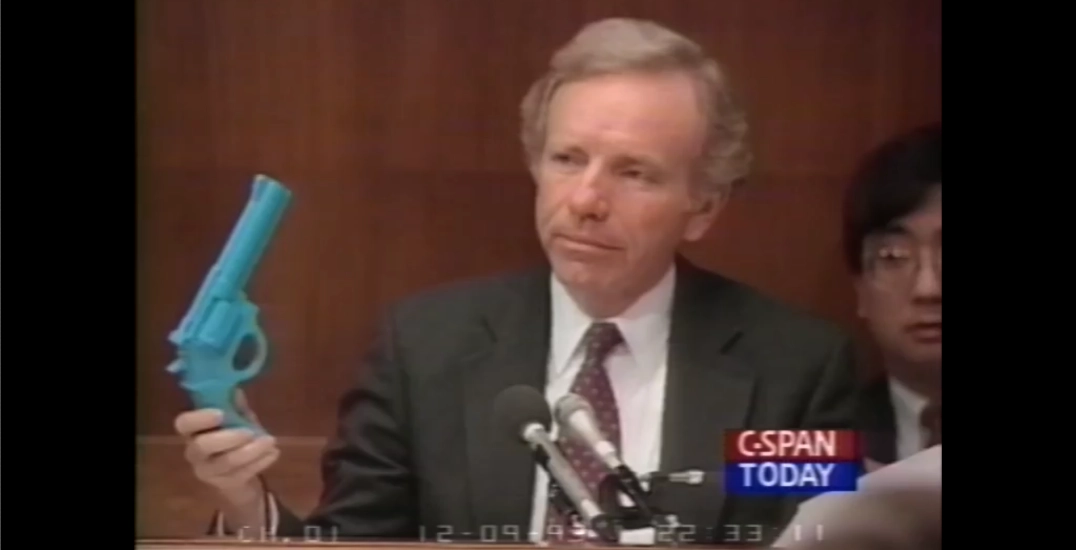
The ESRB paved the way back in 1993. Faced with public concerns about gun violence, senators Kohl and Lieberman found in video games a convenient scapegoat. They dragged publishers into a series of congressional hearings and demanded them to keep “harmful” games that “degrade women” away from children. With a contained grin, Kohl made it clear “I hope you walk away with one thought: if you don’t do something about it, we will”.
And so, the industry created both the ESRB and its legal owners, the Entertainment Software Association. Nine of the biggest game retailers at the time, including Wal-Mart, Toys “R” Us, and Babbage’s (Now Gamestop), were also forced to attend these meeting and asked to stop selling games without the approbal of this new organizations. While they refused at, they eventually caved and complied. Years later, Lieberman would even try to make ESRB ratings mandatory by law, unsuccessfully.
Politicians created the ESRB and still dominate it today. Founder Doug Lowstein worked five years as the Legislative Director of US Senator Howard Metzenbaum. He was replaced as president of the ESA by Michael D. Gallaher, a cabinet member of George W. Bush while Vice President Stacy Feuer worked at the Federal Trade Commission. Out of the eight people who lead the ESA today, all, but two, have worked for the American government: Stanley Pierre-Louis (Court of Appeals), Gina Vetere (Chamber of Commerce), Christianna Barnhart (Senate Counsel), Missy Foxman (Small Business Administration) and Jennifer Gibbons (California Governor’s Office).
Faced with this evidence, one thing is clear: Classification boards weren’t the alternative to government censorship, but its enforcers.
ENFORCED BY THE INDUSTRY
Government control isn’t absolute. Hence, classification must also be upheld by other powers, such as retailers and platform holders. Without them “We’d never be able to assure the effectiveness of the system”, explains ESRB Vice President Randy Walker. Even if the law is no object, games rated Adults Only or simply refused a rating, are punished in the following manner:
- All console manufacturers, Microsoft, Sony and Nintendo, forbid them in their platforms.
- Google and Apple do not allow them in their stores.
- With the exception of Steam, all major retailers, both digital (Epic Games Store) and brick and stone (Gamestop, Walmart) refuse to stock them.
- Not a single large publisher works with adult only games.
- The gaming press provides little or no coverage.
- Showing them on streaming platforms, such as Twitch, is banned.
Economically, these limitations are a death sentence. Such an effective measure, in fact, that it requires almost no action from the boards. Offending titles just don’t get made, or rated, explaining why only 26 of them have ever receiving that rating. And that’s key, because the ban on Adult Only games is the lynchpin that holds the whole system together.
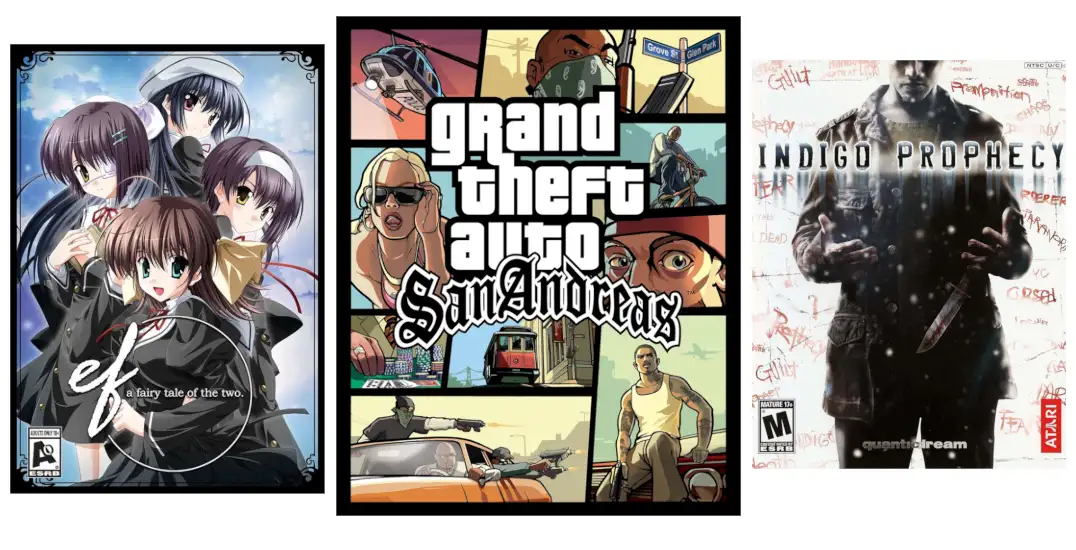
Video game censorship predicates itself on the protection of children. Hence, it cannot allow adult titles to exist unimpeded. It’s only by banning them that censors can exert control over each and every title. ESRB President Gail Markels says it herself “A good rating that is not enforced is worthless”. Without the ability to demand and threaten, they would be toothless.
Other systems of censorship, from the Comics Code Authority1 to the Catholic Index, crumbled once offending works were sold unchallenged. The Hays Code, which censored American films for thirty years, lost its grip when European imports, full of Norwegian nudity, British homosexuals and Italian bicycle thieves, made their way into screens. In 1964, the censors attempted to ban The Pawnbrokers, a Holocaust film, because it featured naked women. Unable to keep it from being released, they finally allowed it as “a special and unique case”. Three years later and faced with an ever-growing number of exceptions, the code collapsed2.
However, refusal to sell adult only titles is the norm in the video game industry. Tim Sweeney, Epic Games Store owner, justified his refusal by arguing he didn’t want to be a “porn seller”, a category he includes alongside “bloatware, asset flips or any sort of thing that’s meant to shock players”. Were he a bookseller, this argument wouldn’t be taken lightly, but, as the president of a ESA member, it’s expected of him. After all, when the ESRB proposed scanning player’s faces to determine their age, they did so in collaboration with SuperAwesome, an Epic Games subsidiary.
NEITHER PUBLIC NOR PRIVATE
This combination of public and private interests may seem unusual. Telling, perhaps. Going back to 1993, Lieberman openly accepted that he would “like to ban all the violent video games” yet recognized that “It’s hard to control every measure of this, especially in a society that values free speech.” Similarly, if competitors collude to regulate a market, the resulting cartel could be found in breach of antitrust law.

The solution lies in the middle: Video game censorship boards are public enough to enforce legal and political controls yet, at the same time, sufficiently private so as to remain unaccountable. The German USK provides a blatant example. According to their very own website, age ratings are legally binding and tasked to Ministries via the Youth Protection Act. The State of North Rhine-Westphalia provides the staff, which are “involved in every classification procedure”. And yet, paradoxically, the USK is privately owned.
The result is a paralegal system, armed by the government but exempt from its responsibilities. Since classification boards are, technically, private organizations, they are not legally obliged to give due process, respect free speech or keep themselves separate from religious interference. Coupled with the presence of politicians, policemen and prosecutors3, it’s hard not to conclude that our expression through video games has been criminalized through the back door.
What fairness can we expect, when ESRB chairwoman Gail Markels, brags on Linkedin that she “Maintained 100% trial conviction rate” during her time as Assistant District Attorney in New York? If PEGI gives us a retail ban, we might take it to the complaints board. However, they choose who sits on that board as well. Members like Olivier Gerard of the USAF, a goverment-funded French organization which opposed the legalization of contraception, abortion, civil partnerships and gay marriage.
Unlike a trial, where we stand before our peers, the power-brokers behind classification aren’t like you and me. A rich elite, their ranks are comprised of CEOs, most often from TV networks, Disney or the music industry. They own real estate agencies, and lead their own lobby groups and charities. In Europe, their names are followed by nobiliary titles and acronyms such as DBE and OBE. “People who don’t play them try to restrict them” complain Shinji Mikami (Resident Evil) and Suda 51 (Shadows of the Damned).
REGULATORY CAPTURE
Besides personal gain, the system affords the chance of regulatory capture. That is, by becoming part of the process, publishers can bend it to their advantage. For example, titles published by Ubisoft, Electronic Arts or Sony are treated with more lenience than competitors who aren’t part of the boards.
Consider Take Two Interactive. Publishers of both Manhunt II and Grand Theft Auto San Andreas, they incurred astronomic losses when both got banned by the ESRB. According to reports, merely recalling the product from stores had a cost of 24 million dollars. Grand Theft Auto V, which pushed limits even further, could have suffered the same fate.
Trevor, a main character, is introduced through a sex scene. He threatens to rape his partner’s boyfriend before bludgeoning him to death. While his partner grieves, the player may opt to run her over. Another interactive scene has him torture an innocent man, pulling his teeth out with pliers and even crushing his testicles in order to emasculate him. But, this time, Take Two came prepared.
President Strauss Zelnick, who took the reins after the previous fiasco, was also an ESRB chairman. A natural step, since other members such as Bill Gardner and Gail Simone, already offered their services to video game publishers. Dave Gossett proudly notes that he “worked closely with several very successful video game publishers”, learning first hand “Strategies that helped Grand Theft Auto V gross $800 million in revenue”. Lastly, Chris Madwick, another Take Two employee, also joined PEGI’s Experts board.
Even then, the process isn’t the same for everyone. Boards can impose fines of hundreds of thousands of dollars, a pitiful amount for large companies but life-ruining for indepdentent artists. Even the cost of the process itself, about 1500€, represents a huge barrier. When our free expression carries such price tags, we might need to think twice before using it.
The result is that independent designers are prevented from accessing the retail circuit, forcing them to relinquish control over their own work to established powerbrokers. Ultimately, board members not only manage to shut down potential competitors but also reserves them the glory of breaking the same rules they willingly impose on others.
How video games are censored, Part II: The sins of fiction →
Notes:
1.- American classification board for comic books created in 1954 and not truly abandoned until 2011.
2.- While the Hays Code collapsed, the organization behind it did not. After a decade in the shadows, it was rebranded as the Motion Picture Association of America (MPAA) and became Hollywood’s current censorship board.
Further reading:
I once tried to buy an indexed movie (German) – The same German authorities that “index” video games also work with film. In this tragicomic piece, Hans Schmid explains how they prevent him from obtaining uncut versions of films such as Hitchcock’s Psycho. Not only do his censored copies arrive covered with warnings, those warnings are censored as themselves! Worse of all, he explains being unable to review or discuss indexed films in depth, as that could land him in jail.


